

Corporate Governance and Deadlocks — Who Calls the Shots in the Company?
Business collapse often begins not with market volatility, but with a deficit of legal prevention. When managerial decisions are built solely on optimism, invisible cracks appear in the company’s foundation. Corporate growth is frequently hindered not by competitors, but by an internal “decision-making vacuum.” Managing large capital means that every step must be stress-tested against critical reality. The involvement of a professional lawyer is not a bureaucratic barrier; it is the immunity of your assets. A lawyer sees mines where others only see perspective. Are you sure your decisions are legally infallible? Learn how to protect your company from internal tremors and create a security filter that insures against any deadlock before you even step into it.
Real Case: Anatomy of a 5-Million Dispute One of the recent cases successfully concluded by KH & PARTNERS resembled a high-stakes “chess match.” The client—a 50% shareholder of a major distribution company—found themselves in a deadlock. The partner blocked all operational expenses, from salaries to lease payments. The goal was simple: bankrupt the company and acquire its assets for a symbolic price.
Our team’s in-depth analysis of the charter revealed an “invisible loophole” that the opponent had missed. Instead of a standard, years-long court battle, we utilized a specific legal mechanism that stripped the partner of their veto right regarding the delegation of the director’s authority. As a result, the company resumed operations within 72 hours, and the opponent was forced to come to the negotiating table.
Precedents of the Supreme Court and the European Court of Human Rights (ECHR) Our strategy is never just theoretical. We rely on the practice of the highest instances:
-
Precedent of the Supreme Court of Georgia: The Court has repeatedly explained that during a corporate deadlock, if partners have not pre-defined conflict resolution rules in the charter, the court cannot substitute their will. This means the state will not save you if your “Corporate Constitution” is flawed. The charter and the shareholders’ agreement are the “law” of your business. If this law is defective, the court simply records the fact: management is paralyzed. Consequently, the only legal instrument left in the court’s hands is not the rescue of the business, but its “euthanasia”—forced liquidation.
-
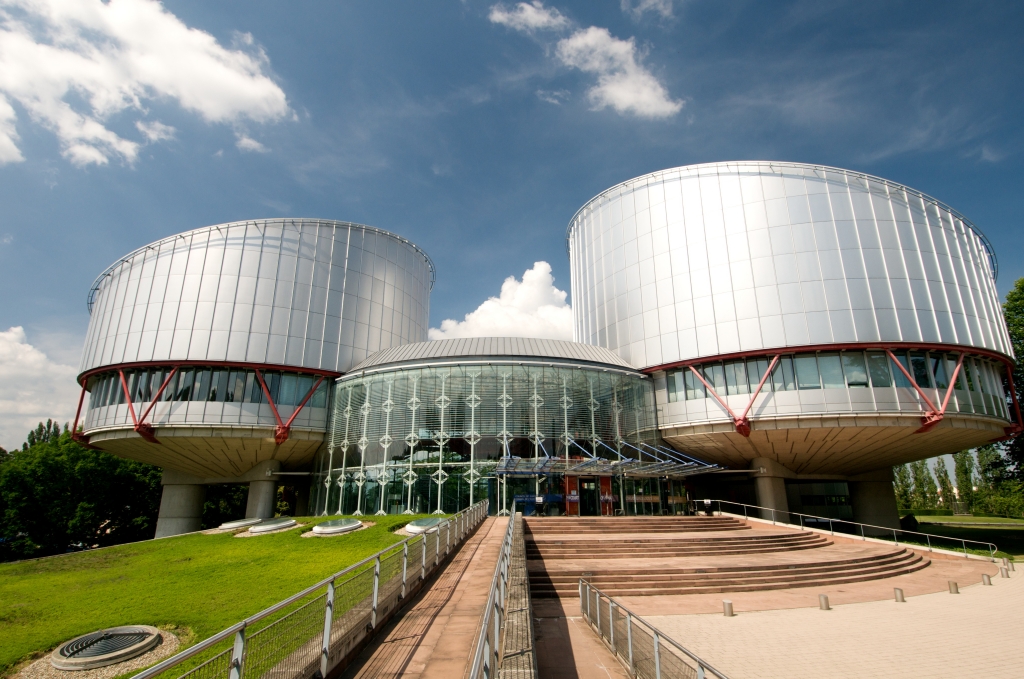
Strasbourg (ECHR) Precedent: The European Court of Human Rights (e.g., Case of Sovtransavto Holding v. Ukraine) emphasizes that the state must ensure a fair trial in corporate disputes, but the protection of shareholders’ rights must primarily be guaranteed by internal documentation. The Court’s practice tells us: protection of property rights begins where the legal document is flawless. If your management system is vague, you lose effective control of your property, which the Strasbourg Court assesses as an infringement of property rights.
-
ECHR Precedent (Project-Trade d.o.o. v. Croatia, 2020): This case clearly demonstrates that a malfunction in the management system leaves a business vulnerable to radical state intervention. In this case, against the backdrop of an internal crisis, shareholders lost property without any prior control, leading to a multi-year legal war. The Strasbourg Court ruled that even during management paralysis, the owner should not be deprived of the right to judicial protection—this is a warning that unforeseen legal risks will leave your assets in uncertainty for years. Business is a living organism. What worked at the founding stage may be your business’s “Achilles’ heel” today.
European standards require a business to have a solid management architecture to avoid corporate paralysis, which often causes irreversible financial damage. A Shareholders’ Agreement prepared by a professional team is a crucial lever to keep the reins of management in your hands instead of the court’s.
Remember: When a crisis hits, it is too late to amend the contract. A strong business is built on the assumption that a partnership may end, and legal architecture turns that ending into a new, profitable beginning.
The German Model: Priority of Business Viability in Corporate Law Germany is considered the best European example for regulating business deadlocks, where preserving the business is the supreme principle. The German Limited Liability Companies Act (Gesetz betreffend die Gesellschaften mit beschränkter Haftung) relies on the doctrine of “Duty of Loyalty” (Treuepflicht), which prohibits partners from blocking the business. If parties cannot agree, the German model allows for the appointment of a “neutral manager” or forced share buyout to avoid company liquidation. German legal architecture recognizes strict deadlock resolution mechanisms that force partners toward a constructive agreement to avoid losing control of property. Ultimately, this approach ensures that a personal conflict between partners does not become the cause of the entire business’s collapse.
Exclusive Knowledge: How Do We Stop the War? At KH & PARTNERS, we use mechanisms that do not exist in template jurisprudence:
-
Shotgun Clause: A mechanism that forces a partner to either buy shares at a fair price or sell their own.
-
Swing Vote: Involvement of a third, independent party in making critical decisions.
-
Shareholders’ Agreement (SHA): A partnership agreement that is stronger and more detailed than the standard charter.
Our 33 years of practice teach us: the best dispute is the one that never happened because the opponent saw your legal superiority.
Conclusion: Don’t wait for your business to become a victim of a “Deadlock.” Create a management system that works even when partners are not speaking to each other.
Book a strategic audit today:
📞 +995 595 17 17 41 📩 info@khlaws.com
Article Author: Mariam Gorgotadze Lawyer at KH & PARTNERS
 Analytics